
Choosing the pump
The pump is a placement decision, not a rental line
Boom or line comes down to three questions: where the truck can sit, how far the concrete has to travel, and what is in the air above the pour. Answer those wrong and a two-hour placement turns into a wheelbarrow morning.
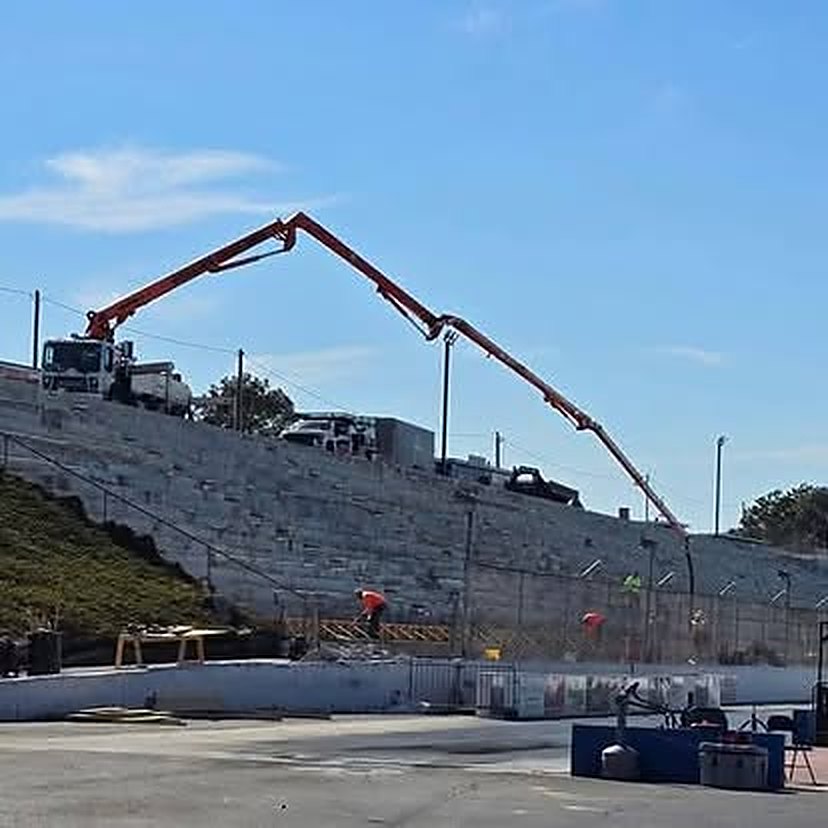
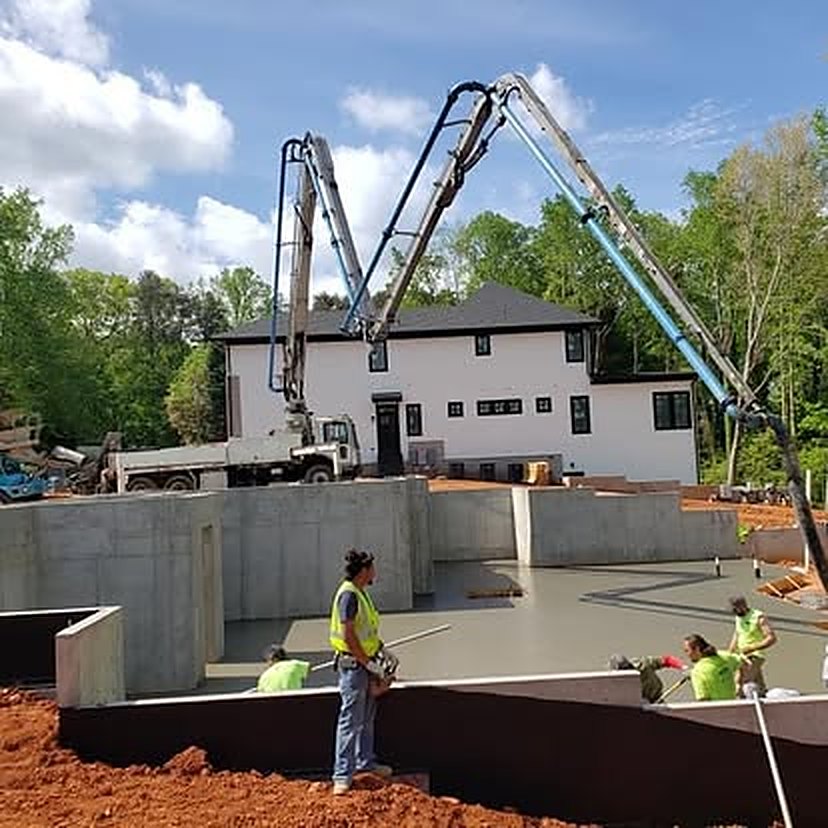
A boom pump places from a folding boom on the truck, so the concrete goes over obstacles rather than around them — over an open excavation, across a slab that is already poured, up to an elevated deck. It buys speed and reach, and it asks for room: a spot to set, outriggers fully extended on both sides, and clear sky through the boom’s working arc.
A line pump is trailer-mounted and pushes concrete through hose laid on the ground. Slower per yard and more hose to move by hand, but it fits down a side yard, through a gate, inside a building, or under a canopy where a boom has no business being. On small, scattered residential pours it is often the faster answer once set-up time is counted.
- Boom when the concrete has to clear something — a wall, an open hole, finished work
- Line pump when the gate is narrow, the ceiling is low, or the pour is small and broken up
- Hose off the end of the boom for the last stretch, so the crew places instead of dragging
- Straight off the chute when the truck will genuinely reach — we will say so rather than sell you a pump
Pumping runs through our own scopes: footings and foundation walls, slabs and flatwork, and industrial pours where half the placement is out of the truck’s reach.
Before the pump shows up
Three things we walk on your site, not over the phone
A pump that cannot set up is a load of concrete going hard on the road while everyone stands around. These get checked and agreed before the plant is booked.
Access and set‑up footprint
Where the pump sits, whether the outriggers can extend fully on both sides, and how ready-mix trucks reach the hopper and turn around without blocking the rest of the job. A pump parked in the only lane on site costs everybody a day.
Overhead clearance
Power lines, service drops, canopies, roof structure and tree limbs all live in the boom’s working arc. Required clearance from energized lines is not something we negotiate on pour morning: if the boom cannot stay clear, the line gets covered or de-energized by the utility, or we place with a line pump instead.
Ground under the outriggers
Outrigger loads are concentrated and unforgiving. Backfilled utility trenches, fresh fill, basement walls below, soft shoulders and vault lids get identified first, then cribbed and padded to spread the load — or the truck sets somewhere else.
Mix, slump and crew
A pump only helps if the mix and the crew are sized for it
Concrete does not become pumpable because there is a pump on site. The mix has to be batched knowing it is going through a line, and the crew has to be big enough to take the placement rate the pump can deliver.
Most bad pump days trace back to one of two things: a mix the plant batched as if it were going down a chute, or a placement rate the finishers could never keep up with. Both are decided before the first truck leaves the yard, which is why we get the mix design in hand and size the crew to the pour rather than to the day of the week.
- Aggregate size and fines content checked against the line size before the order is placed
- Slump set with admixture and agreed with the plant — nobody adds water at the hopper to make it move
- Air-entrained specs designed knowing a pump can strip some of that air out
- Line primed with slurry that gets caught and hauled, never placed in the forms
- Hose crew, vibrator hands, screed and finishers matched to the placement rate
Tight, elevated and interior placements are where this matters most — hose runs inside a building, a deck over occupied space, a pour reached across a finished floor. The concrete is the same; the planning is not.
Who we pump for
Pumping comes with our crews — and, when the calendar allows, with yours
On our own scopes the pump is simply part of the job: it shows up with the crew that is forming, placing and finishing, so there is no coordination gap between the pump, the plant and the trowels.
We also place for other contractors’ pours where scheduling allows. You form it and finish it, we bring the pump and the operator, and we talk through access, mix and wash-out the same way we would on our own work.
How a pumped pour runs
Set up, prime, place, clean up
Scope and reach
Send the plan and a couple of photos of the approach. We work out boom or line, where the truck sets, and how many yards an hour the finishing crew can actually take.
Site walk
Access route, overhead lines, outrigger ground, hose run, wash-out location and the ready-mix turnaround — walked and agreed before the plant is booked.
Set up and prime
Truck spotted, outriggers cribbed and fully extended, line primed and the slurry caught. Slump checked off the first truck before anything reaches the forms.
Place, then clean up
Placement paced to the finishers, hose moved with the crew, then everything washed out into containment we brought and hauled off with us.
Questions we get
Pumping, answered plainly
What access does the pump need?
For a boom pump: a firm, reasonably level place for the truck to set, room to extend the outriggers on both sides, clear sky through the arc the boom will work in, and a route ready-mix trucks can use to reach the hopper and get back out. For a line pump: somewhere the trailer fits and a path to lay hose — far less footprint, at the cost of placement speed.
If you are not sure it will work, send photos of the approach and the pour location before you schedule anything. It takes us a few minutes to answer and saves a wasted mobilization.
How far can the boom reach?
It depends which pump the pour calls for. The boom class we use most reaches roughly 100 ft up and 90 ft out; a line pump will run a few hundred feet of hose to somewhere a boom cannot sit at all. We size the pump to the pour rather than making the pour fit one machine.
Published reach is measured from the pump’s center pin in open air, which is never where the pour is. What matters on your site is reach from the spot the truck can legally and safely set up, minus whatever the boom has to fold around, plus the unfolding height the boom needs before it can extend at all. Tell us where the truck can sit and where the concrete has to land, and we will tell you whether it makes it.
Where does the wash-out go?
Into containment, and off site with us. Wash-out is concrete waste plus strongly alkaline water — it does not go into a storm drain, a swale, the landscaping, or a hole dug behind the garage.
On commercial work we use the wash-out area designated in the site SWPPP if there is one, and bring our own containment if there is not. On residential work we always bring it: no gray water on the lawn, no hardened slurry pile left for the homeowner to deal with after we are gone.
Does the concrete need a special mix to pump?
Not special, but pumpable — and the plant needs to know before they batch. Aggregate size and the sand and fines content matter more here than the PSI number does; slump gets brought up with admixture rather than water, so strength is not thrown away making the mix move; and an air-entrained mix should be designed knowing the pump will take some of that air with it.
Have the order noted for pump at the plant and send us the mix design ahead of the pour. If the spec is tight on air content, we settle with the plant and the testing lab beforehand where the fresh-concrete air test gets taken — off the truck or off the end of the hose — because the pump can move that number. Flatness is not a mix question at all: it is surveyed off the finished floor within the first few days, so the screed method and the crew have to be sized for it on pour day rather than explained afterward.
Start your project
Send us the plans. We’ll send back a number you can build to.
Takeoffs, budget pricing, and scheduling for commercial, industrial and residential concrete. Tell us the scope and the date you need to be out of the ground — we’ll tell you honestly whether we’re the right crew for it.