
Site concrete
Everything outside the building line
Site concrete fails in public. A rutted truck court, a walk that ponds after every rain, a ramp that misses cross slope by half a percent — all of it is visible from the parking lot, and all of it traces back to grade and joint decisions made before a truck ever showed up.
The base and the layout matter as much as the pour, so nothing gets covered here until it is documented. Subgrade is proof-rolled and signed off, stone base is compacted and density tested, and the joint plan is drawn on the site plan and agreed before the saw comes out — whoever's crew holds that scope. Then we pour it in the order that keeps your site usable.
- Light-duty and heavy-duty sections poured to the thicknesses the civil drawings call for, not one thickness everywhere
- Joint layout drawn on the paving plan, squared up, and tied to the phase lines
- Castings, sleeves and light-pole bases set to finish grade before placement
- Air-entrained mixes where freeze-thaw and de-icing salts are a factor
- Curing compound on the same day, and protection until the surface can take traffic
What is in scope
Six pieces of a site package
Most site packages need all six. Splitting them between contractors is where the elevations stop matching at the joint.
Parking lots & drive aisles
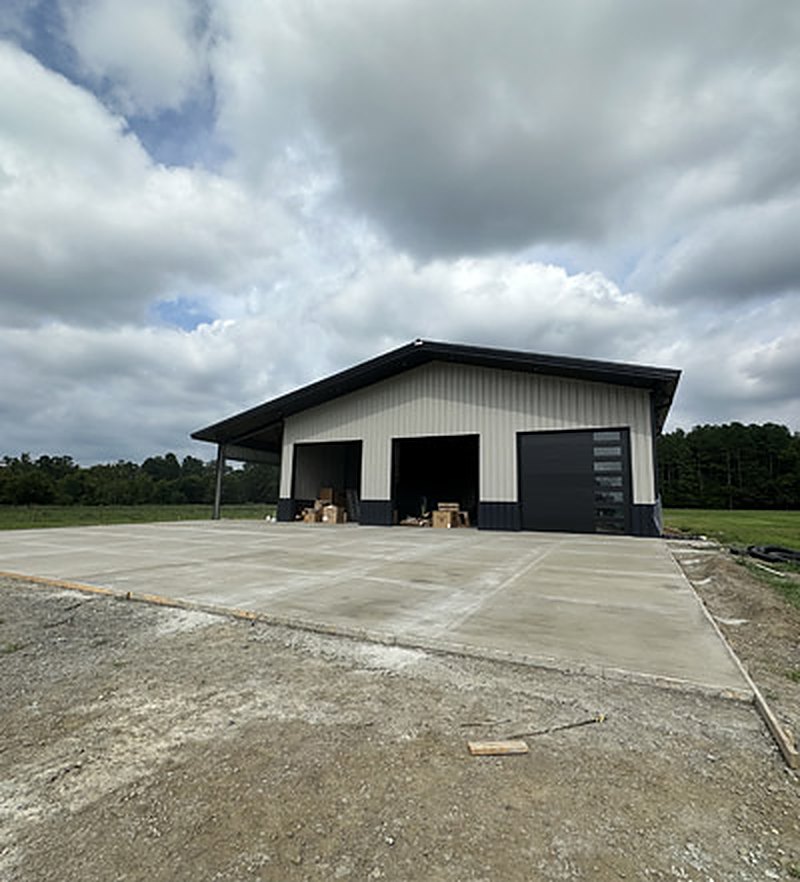
Full-depth concrete paving over a proofed subgrade and compacted base. Car bays, drive-through lanes, dock aprons and truck courts each get the thickness, reinforcement and joint spacing the loading actually calls for — commonly a lighter section in the parking field and a heavier one everywhere trucks turn.
Curb, gutter & valley gutters
Barrier curb, curb and gutter, and valley gutters that actually carry water across a drive instead of ponding in it. Radii, ADA flush transitions and tie-ins to existing curb are formed by hand so the line stays true where it matters most.
ADA ramps & detectable warnings
Curb ramps built to the slopes that get measured, not eyeballed: running slope no steeper than 1:12, cross slope held at 2 percent or less, level landings top and bottom, and detectable warning panels set true to the back of curb.
Sidewalks & pedestrian concrete
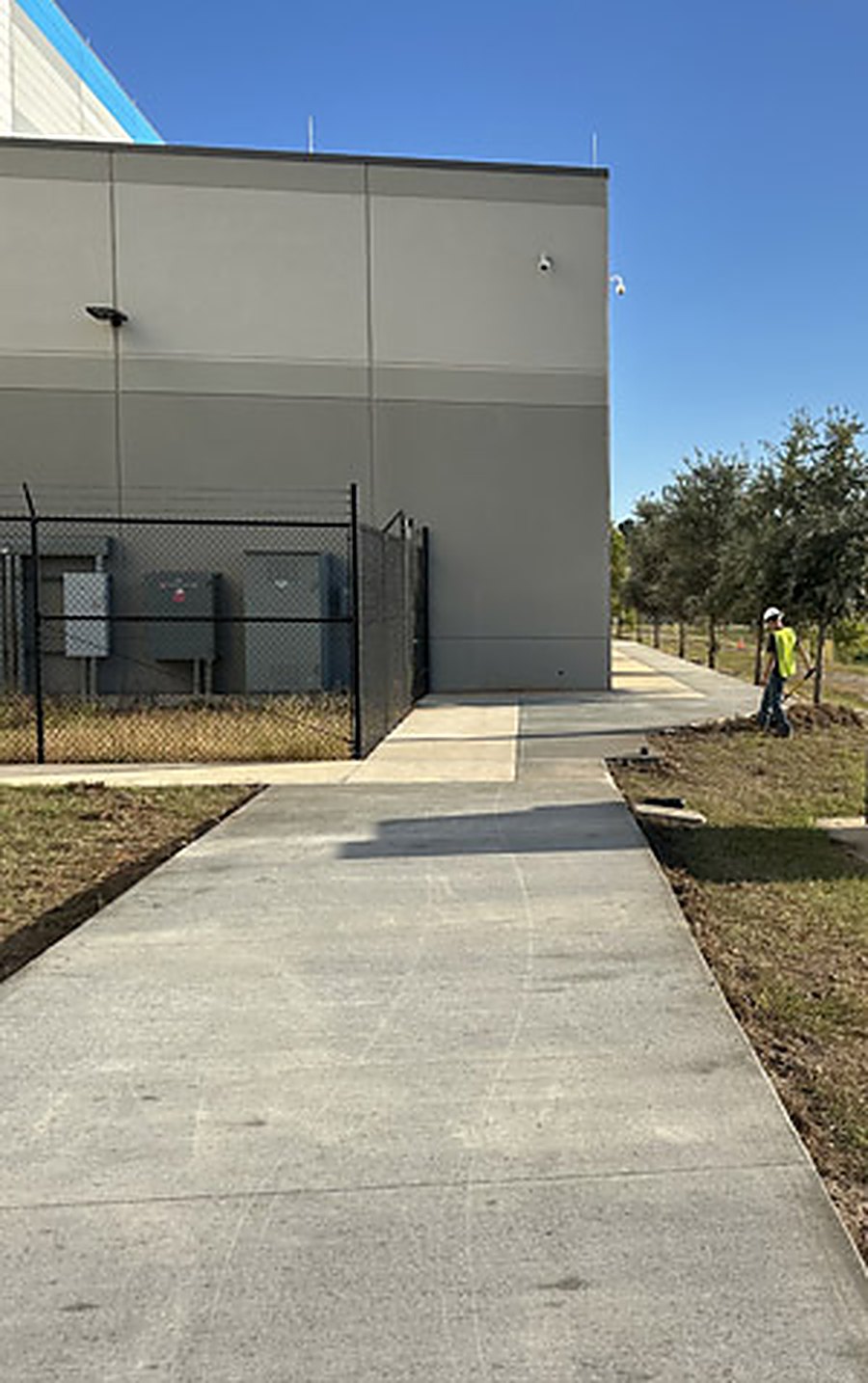
Walks, entry aprons, stoops and pads poured to a consistent width and pitched to drain away from the building. Broom finish run across the direction of travel for grip, joints tooled or sawn on a spacing that keeps the panels square.
Equipment, generator & dumpster pads
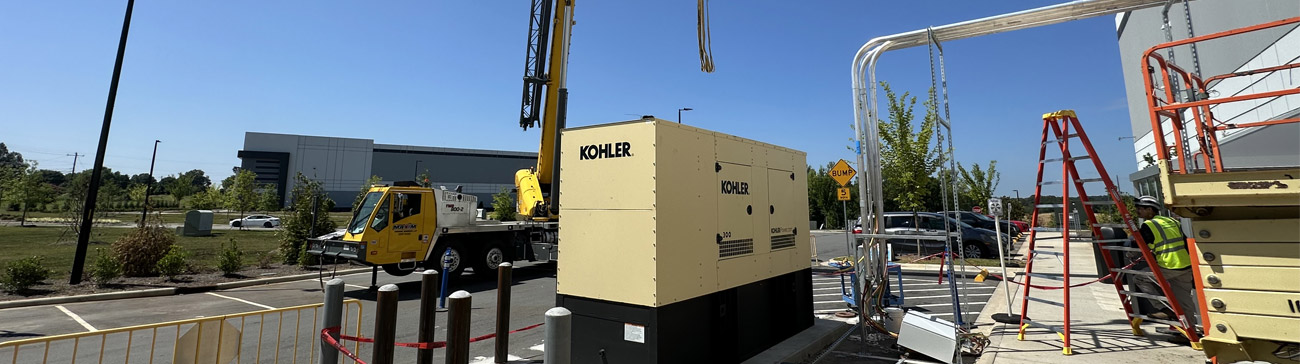
Housekeeping and equipment pads set from the vendor drawings — anchor bolts on a template, conduit stub-ups and sleeves placed before the pour, pad held level to the equipment tolerance. Dumpster pads sized for where the truck's wheels actually land, plus filled pipe bollards to keep the forks off the wall.
Drainage & grading
Positive slope to the inlets, castings and adjustment rings set to the finished surface, and trench drains formed to line and grade. We shoot the lot before we pour and again before we leave, because a birdbath is far cheaper to find on paper than in a puddle.
Choosing the section
Concrete or asphalt? Usually both.
Concrete costs more per square foot up front, takes longer to open to traffic and is harder to patch invisibly. Asphalt is cheaper to place, opens fast and forgives minor settlement. Neither of those facts decides a truck court.
What decides it is the load and where it sits still. A trailer parked on its landing gear puts a very small footprint under a very large load. Trucks turning tight scuff and shove a flexible surface, and fuel, hydraulic oil and trash-truck brine eat it. That is a concrete problem, and paying for asphalt there twice is more expensive than paying for concrete once.
- Concrete where it earns its keep: dock and door aprons, truck courts, drive-through and trash-truck lanes, dumpster pads, entrance approaches
- Asphalt where it is the smarter buy: open car-parking fields with light traffic and no standing loads
- Transitions detailed on purpose — thickened concrete edge, dowelled or keyed joint, and a header the asphalt crew can butt to
- If the lot is phased over several years, concrete goes in first where the trucks run so the pattern never has to change
How a site package runs
Base first, saw last
Paving problems are almost always grade problems that got covered up. The sequence below exists to stop that.
Grades & subgrade
Civil drawings checked against what is actually on the ground. Subgrade proof-rolled with a loaded truck, soft spots undercut and replaced, aggregate base placed, compacted and density tested before anything gets covered.
Layout & forms
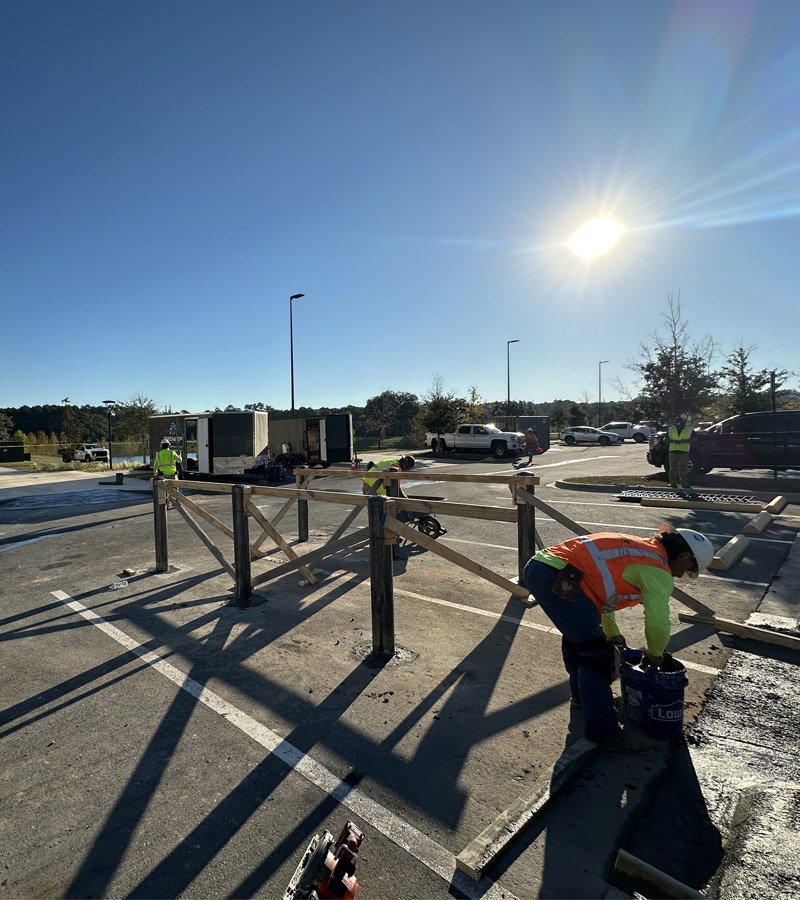
Curb line, walk widths, pad locations and ramp landings staked from the site plan. Forms set and braced to elevation, castings and sleeves confirmed, joint plan marked out so the phase lines and the control joints are the same lines.
Placement & finish
Reinforcement and dowels tied, mix confirmed on the ticket for slump, strength and air, then placed by chute, buggy or pump depending on the reach. Screeded, floated, edged and broomed, with the crew sized so no panel sits waiting.
Saw, cure & open
Control joints cut inside the window — late enough to hold an edge, early enough to beat random cracking. Cure applied, joints sealed where specified, curb backfilled, and the section barricaded until it can take the load it was designed for.
Working around an open business
We pour it in pieces so you never close
Very few owners can hand over an entire lot for a week. Phasing is not a favor we do at the end — it is drawn into the bid, because the number of phases changes the price, the joint count and the schedule.
- Phase lines placed on construction joints that belong in the layout anyway
- A fire lane, one entrance and the dock positions you name stay live through every phase
- Temporary stone or asphalt ramps at the edge of fresh concrete so nobody gets landlocked
- Pour windows set around your delivery schedule and customer hours, so a section is taken when it costs you least
- Barricades, cones and signage set before the crew leaves, not the next morning
- Striping and seal work coordinated so the lot only gets taken twice, not four times
Straight answers
What owners and GCs ask first
Can you phase the work so the lot stays open?
Yes, and it belongs in the bid rather than in a conversation on the first morning. We break the lot into pour sections that follow the joint layout, so every phase line lands on a construction joint the paving needed anyway instead of a cold seam in the middle of a panel.
Tell us which entrance, fire lane, dock doors and drive-through lanes have to stay live, and what hours your deliveries and customers run. We build the sequence around those hours, and where they leave no workable window for a section, we would rather settle the options and what they cost during pricing than after the schedule is set. Worth knowing up front: each additional phase adds a mobilization, a joint and some cost, so a four-phase lot prices differently than a two-phase lot.
Concrete or asphalt for a truck court?
For a truck court, concrete — and we will say so even though it is the more expensive line on the estimate. Trailers dropped on their landing gear concentrate a heavy load on a few square inches, tractors turning tight scuff and shove the surface, and dock areas collect fuel and hydraulic oil. Asphalt ruts and ravels under exactly that combination.
Out in the open car-parking field, where nothing sits still and nothing turns hard, asphalt is often the better buy. The split most sites land on is concrete at the approach, the drive lanes, the dock apron, the truck court and the dumpster pad, with asphalt in the parking bays. We are happy to price both sections so the comparison is real numbers rather than opinion.
Who handles the base — you or our site contractor?
Either arrangement works, as long as it is decided before anyone mobilizes. On most commercial jobs the site contractor brings subgrade to a stated elevation and we take it from there. We will walk it with you and proof-roll it before we accept it.
What we will not do is pour on a subgrade we have not seen work under a loaded truck. If it pumps or ruts, it gets undercut and replaced before steel goes down. Replacing a soft pocket costs a fraction of replacing the panels that crack over it two winters later, and the testing paperwork is a lot easier to hand an inspector than an explanation.
How soon can traffic get on the new concrete?
It depends on the mix design, the thickness and the weather, and the number that matters is the one on the cylinder break, not a guess off a calendar. Foot traffic comes back first, then cars, and loaded trucks last. We set the opening date with you against the specified strength and keep the section barricaded until it gets there.
If the schedule is tight, say so during pricing rather than after the pour. A higher early-strength mix can pull the opening date in, and it costs more per yard — that is a trade you should get to make with the numbers in front of you.
Often on the same job
The rest of the site package
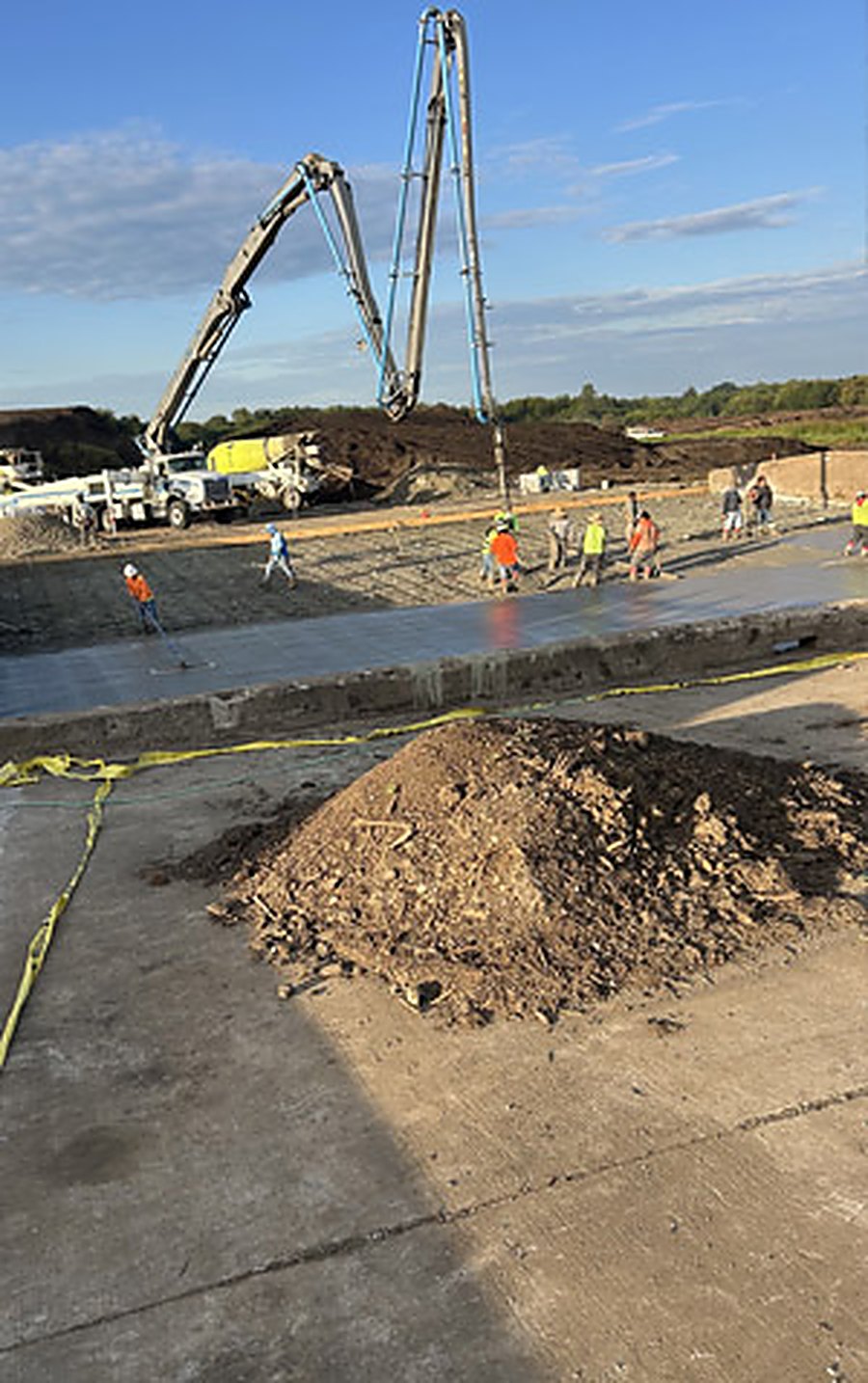
Slabs & Flatwork
Interior slab-on-grade and warehouse floors finished to the specified flatness and jointed on an approved layout.
Learn more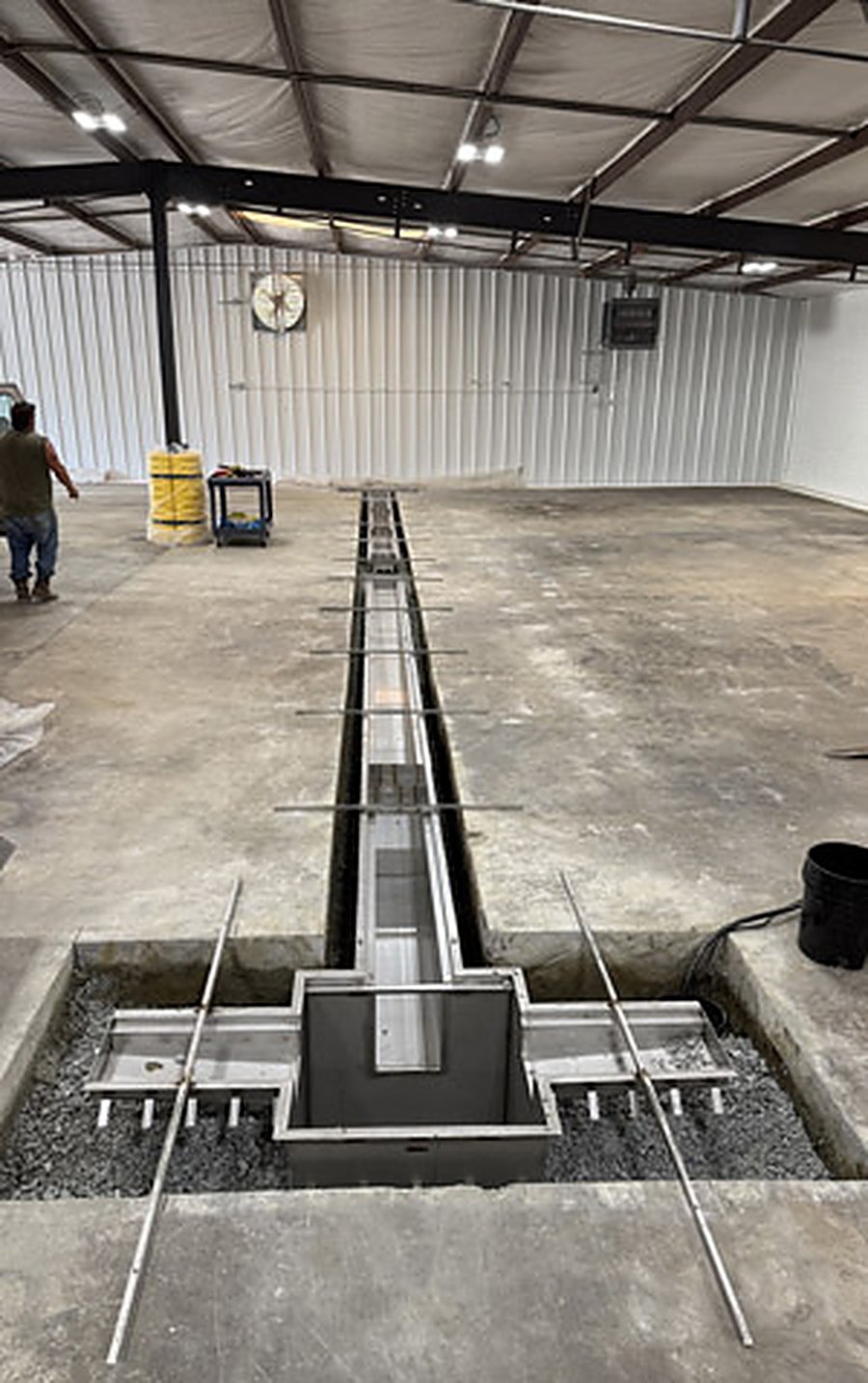
Commercial & Industrial
Equipment foundations, pits, trench drains and heavy structural slabs built to engineered drawings.
Learn more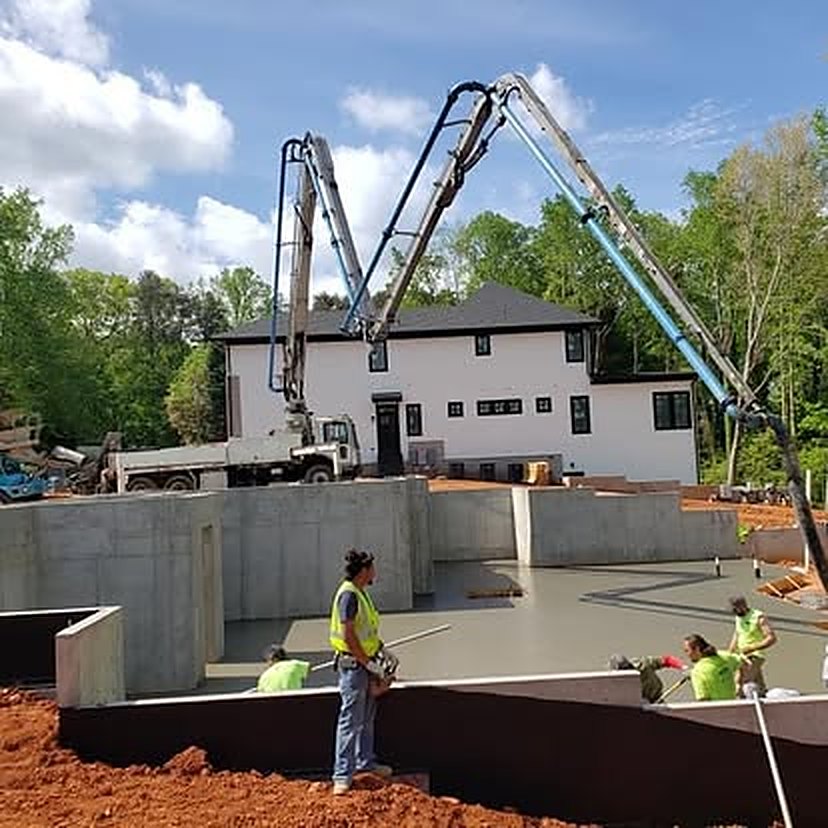
Concrete Pumping & Placement
Boom and line pump placement for pours a truck cannot reach — over curb, across a live lot, or behind a building.
Learn moreStart your project
Send us the plans. We’ll send back a number you can build to.
Takeoffs, budget pricing, and scheduling for commercial, industrial and residential concrete. Tell us the scope and the date you need to be out of the ground — we’ll tell you honestly whether we’re the right crew for it.